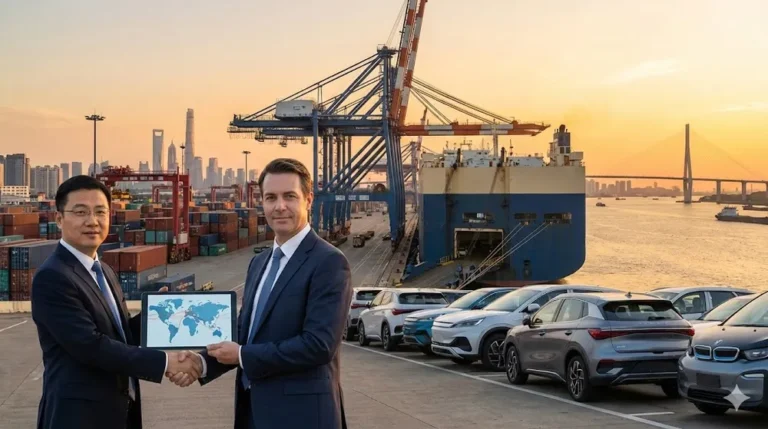


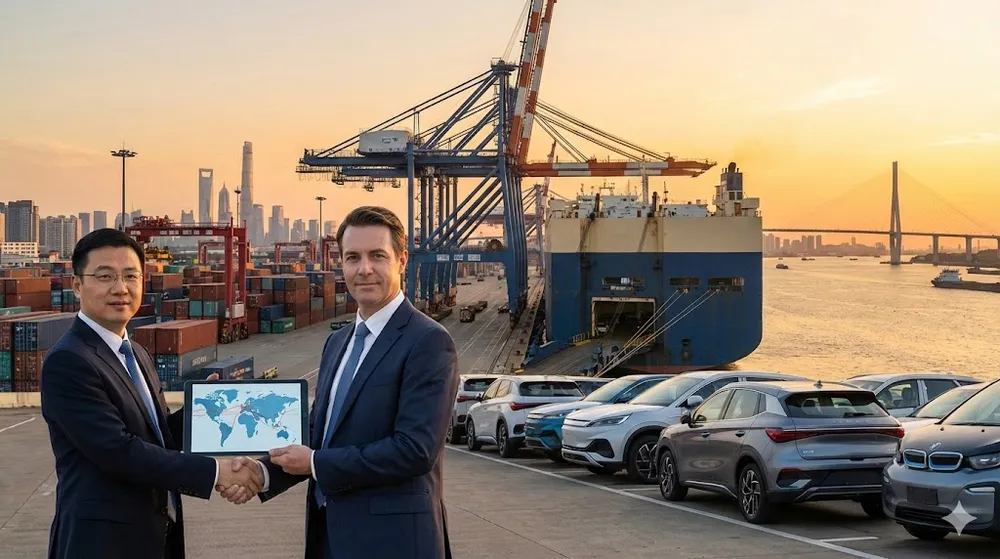
The global automotive market is shifting. For decades, buyers looked to Japan, Korea, and Europe for high-quality used vehicles. Today, a new giant has emerged: China. As the world’s largest automobile manufacturer and consumer market, China now offers an incredible inventory of high-quality used cars, particularly New Energy Vehicles (NEVs).
However, for international dealers and importers, the challenge isn’t just finding a car; it is finding a reliable Used Car Export Partner and navigating the complex web of Global Logistics. This guide will walk you through everything you need to know about sourcing vehicles from China and shipping them safely to your country.
1. Why the World is Buying Used Cars from China
The Chinese used car market is booming, and smart importers are taking notice. Before we discuss logistics, it is important to understand why sourcing from China is a profitable business decision for your dealership.
The Advantage of New Energy Vehicles (NEVs)
China is the global leader in Electric Vehicles (EVs). Brands like BYD, Zeekr, Geely, and Tesla (Shanghai manufactured) offer technology that is years ahead of other markets. Buying a used EV from China often means getting a nearly new car with advanced battery technology at a fraction of the price of a new European or American model.
Vehicle Condition and Volume
Because the Chinese domestic market changes cars frequently, the “used” inventory is often in excellent condition. Many vehicles have low mileage and have been driven on modern, well-maintained city roads. The sheer volume of cars available means that whether you need 10 units or 100 units, the supply chain is stable.
Cost-Effectiveness
Compared to traditional markets, Chinese used cars offer a better price-to-quality ratio. This creates a significant profit margin for importers who resell these vehicles in high-demand regions like Central Asia, the Middle East, Africa, Russia, and South America.
2. How to Identify a Reliable Export Partner
Distance creates risk. When you are thousands of miles away, how do you trust a supplier? Choosing the wrong partner can lead to financial loss or receiving cars that do not match the description. Here is what you must look for in a Chinese partner.
Authorized Export License
Not every company in China can legally export used cars. The Chinese government has a designated list of “Pilot Enterprises” that are authorized to handle used car exports. Your partner must possess this license. This ensures they can legally handle the deregistration of the vehicle and apply for the necessary export permits.
Transparency in Inspection
A professional partner acts as your eyes on the ground. They should provide:
- Detailed Video Walkarounds: Showing the engine, interior, and exterior in high definition.
- Third-Party Inspection Reports: Checking for accident history, flood damage, or battery health (for EVs).
- VIN Verification: Ensuring the car paperwork matches the physical vehicle.
Supply Chain Capability
A small trading company might only have access to a few cars. A strong partner has direct connections with 4S stores, leasing companies, and major auction platforms across China. This ensures they can find the specific models and colors your customers demand.
3. Global Logistics: Moving Cars from China to You
Logistics is the backbone of the used car trade. It is not just about moving a car; it is about moving it safely, legally, and cost-effectively. A professional export partner manages this entire chain.
Step 1: Domestic Collection and Transfer
Once you confirm an order, the car must be moved from its current location (e.g., a seller in Beijing) to the export port (usually Shanghai, Tianjin, Nansha, or Khorgos for land transport). During this stage, the car undergoes deregistration (transfer of title from domestic to export status). This legal step is crucial and takes about 3 to 7 working days.
Step 2: Choosing the Right Shipping Method
Depending on your location, there are three main ways to transport vehicles. Your partner should advise you on the best option based on current freight rates and delivery speed.
A. Ro-Ro Shipping (Roll-on/Roll-off)
This is the standard for maritime transport. Cars are driven directly onto a massive ship and parked securely inside.
- Pros: Very safe, minimal handling damage, simple loading/unloading.
- Cons: Routes are limited, and space is often fully booked by new car manufacturers. It can be more expensive for small orders.
- Best for: Africa, South America, Southeast Asia.
B. Container Shipping
Cars are loaded into 20ft or 40ft containers. A 40ft container can typically hold 3 medium-sized cars or 2 large SUVs.
- Pros: Available to almost any port in the world. Protects cars from sea salt and weather.
- Cons: Requires professional packing to avoid damage during transit. You must wait for the container to be full (consolidation) if you are buying single units.
- Best for: Middle East, Europe, remote ports.
C. Railway and Road Transport
For China’s neighbors, sea freight is unnecessary. The China-Europe Railway Express and international truck transport offer rapid delivery.
- Pros: Much faster than sea freight (15-20 days vs. 45 days). Direct delivery to inland cities.
- Best for: Russia, Kazakhstan, Kyrgyzstan, Uzbekistan, and other Central Asian countries.
4. Navigating Customs and Documentation
Paperwork is the most boring part of the business, but it is the most critical. A single mistake in documentation can cause your shipment to be stuck at the port for weeks, incurring heavy storage fees.
Your Chinese export partner is responsible for preparing the following Export Documents:
- Commercial Invoice: Stating the value of the goods.
- Packing List: Details of the cargo.
- Certificate of Origin: Proof that the car is from China (often needed for tax treaties).
- Export License: Government approval.
- Bill of Lading (BL) or CMR: The transport document required to pick up the cargo.
Pro Tip: Always verify the import regulations of your country before buying. Some countries have restrictions on the age of the car (e.g., must be less than 5 years old) or the steering wheel position (LHD vs. RHD). While your Chinese partner handles the export, you (or your local broker) must handle the import.
5. Secure Payment Methods
In international B2B trade, trust is established through secure payment channels. The most common method in the used car industry is T/T (Telegraphic Transfer).
The typical workflow looks like this:
- Deposit: You pay a percentage (usually 30%) to confirm the order.
- Sourcing & Prep: The partner buys the car, inspects it, and completes the deregistration.
- Booking: Shipping space is booked.
- Balance Payment: Once the car is ready to load or the Bill of Lading copy is provided, the remaining balance is paid.
Avoid using personal bank accounts. Always ensure you are transferring funds to a registered company bank account in China to ensure legal recourse and professionalism.
6. Conclusion: Building a Long-Term Relationship
Sourcing used cars from China is no longer a niche activity; it is a mainstream global business trend. As Chinese car brands continue to rise in popularity and quality, the demand for used units will only grow.
Success in this industry relies on a partnership that goes beyond a single transaction. You need a partner who understands quality control, who has mastered global logistics, and who values transparent communication.
Whether you are looking for Toyota, Volkswagen, or the latest BYD electric vehicles, the key is to start with a partner who treats your business as their own. By understanding the logistics and documentation process outlined in this guide, you are already one step ahead of the competition.
Ready to explore the opportunities in the Chinese market? Contact us today to discuss your inventory needs and let us handle the complexities of global logistics for you.